
Midlife weight gain: what your body is trying to tell you.
03 5406 0228
Midlife can feel like the moment your body changes the rules without warning. Weight gathers around your middle. Strength feels different. Recovery takes longer. For many people, this feels like a personal failure, but it is really a physiological shift. Your biology is adapting to a new phase, and understanding this shift can help you work with your body rather than feeling frustrated by it.
A common belief is that metabolism slows sharply in midlife, causing weight gain. But large population research shows that our resting metabolism stays steady from about age twenty to sixty. So the changes you feel are real, but they are not caused by a broken metabolism. They are caused by changes in hormones, activity levels, sleep, stress and, most importantly, muscle loss.
This muscle loss has a name: sarcopenia. And it begins earlier, and influences more things, than most people realise.
Why weight changes in midlife
Although metabolism stays steady (until around the age of 60), the way your body uses energy changes.














Loss of muscle
Studies say that adults lose about three to eight percent of their muscle each decade after thirty, and this accelerates after fifty. Because muscle uses energy even at rest, losing muscle means your body runs at a slightly lower energy cost each day. You may be eating the same foods and moving the same amount, but your body is burning less calories (even at rest).
Maintaining your muscle mass is the most important way to improve your overall health and quality of life, especially as you age
Shifting hormones
Research shows that declining oestrogen in women increases abdominal fat storage and reduces lean mass. For men, lower testosterone is linked with higher fat mass and lower muscle. These shifts do not make weight gain inevitable, but they do change the terrain.
Changes in daily movement
Many people sit more at work, drive more, and move less as life gets busier. Even a small drop in day to day movement can reduce your energy burnt by hundreds of calories without you realising.
Sleep and stress
Studies say shorter sleep drives up hunger signals and reduces appetite control. Chronic stress raises cortisol, which is strongly linked with fat storage around the middle.
All of these changes add up, but sarcopenia sits at the centre.
Sarcopenia: the quiet driver of midlife change
Sarcopenia is the slow and steady loss of muscle, strength and function. It does not happen overnight, and it does not wait until old age. It starts in our thirties and continues unless we interrupt it.
Research shows that sarcopenia:
lowers strength
reduces energy use (calorie burn)
increases fat storage
reduces blood sugar control
affects balance, mobility and confidence
The good news is that it is highly responsive to action.
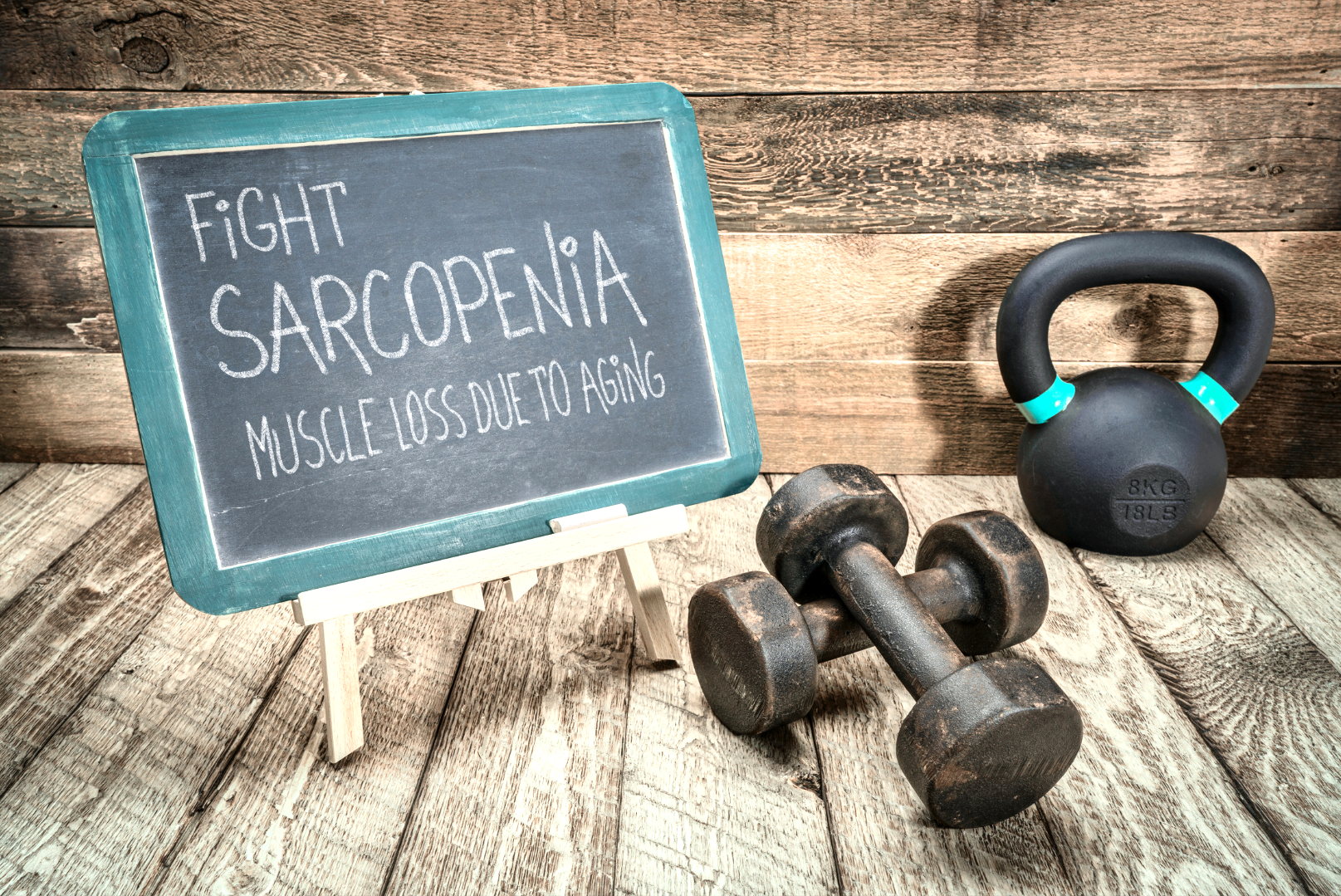
Strength training: the most effective tool we have
Across many studies, strength training is the strongest intervention for slowing or reversing muscle loss. It helps rebuild lean mass, improves strength, supports bone health and increases confidence in movement.
Research shows you do not need heavy weights or long gym sessions. What you need is regular challenge to your muscles to fatigue.
Programs that work well include:
2-3 strength sessions per week
movements that train major muscle groups (think the big muscles in your legs)
8-12 reps
1-3 sets
Strength training is not just exercise. It is a message to your body that you want to keep your muscle.
The role of protein
As we age, our muscles become slower to respond to protein. This means midlife adults need more protein than younger adults to support muscle repair and growth.
International nutrition guidelines advise about 1.2 to 1.6 grams of protein per kg of body weight per day for maintaining muscle. Protein supports appetite regulation, recovery and metabolic health.
The most powerful combination in research is strength training plus enough protein across the day.
What about cardio?
Cardio supports heart health, brain health and mental wellbeing. It helps reduce deep belly fat and improves insulin sensitivity. But studies say cardio alone does not prevent muscle loss. It is helpful, but it cannot replace strength training when the goal is keeping muscle.
Pulling it all together



Midlife is not a decline. It is a shift. And your body is asking for new inputs.
The actions with the strongest evidence are:
strength training two or three times a week – work to fatigue each set
eating enough protein
moving more incidentally across the day
improving sleep
supporting stress
seeking hormonal guidance from a professional if required
Your body is not failing. It is adapting. And with the right support, midlife can become a time of rebuilding strength, health and confidence.
At 3D Physio we have Physios, Exercise Physiologists and a Lifestyle Medicine GP to help with all of your strength training, nutrition, hormonal, sleep and health advice.
References:
Pontzer, H. et al. (2021). Daily energy expenditure through the human lifespan. Science.
Shafiee, G. et al. (2017). Prevalence and causes of sarcopenia. Clinical Cases in Mineral and Bone Metabolism.
Westcott, W. (2012). Resistance training is medicine. Current Sports Medicine Reports.
Miller, S. et al. (2013). Optimising protein intake for older adults. Nutrients.
Lovejoy, J. (2009). The menopause and body composition. International Journal of Obesity.
Kelley, G. (2017). Aerobic exercise and abdominal fat. Journal of Obesity.