An osteoporosis diagnosis is not the end of the story.
How to reduce your fracture risk and live your best life!
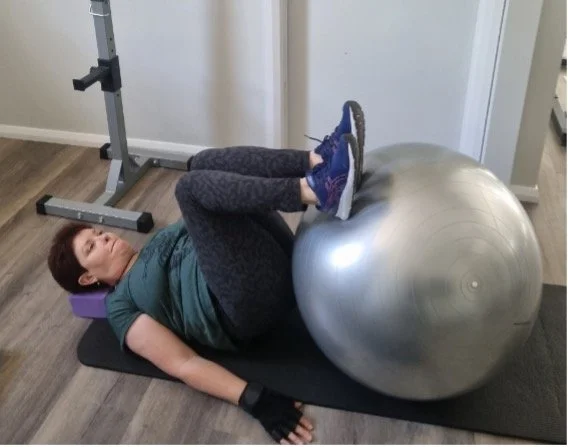
Double leg bridge on exercise ball.
Osteoporosis is far more common than many people realise, and receiving a diagnosis can feel overwhelming. But there is a great deal you can do to strengthen your bones, reduce your fracture risk, and stay active doing the things you love.
At 3D Physiotherapy, we help clients across Bendigo, Kennington and Boort understand their bone health and build long-term confidence through evidence-based movement and whole-body care.
Understanding osteoporosis
Osteoporosis occurs when bone loses density and strength over time. This happens when the body breaks down old bone faster than it can build new bone. The result is bone that becomes thinner, weaker and more susceptible to fractures. Many people don’t notice symptoms until later stages, but early signs may include:
Reduced height
A rounded or stooped posture
Greater stiffness through the mid-back
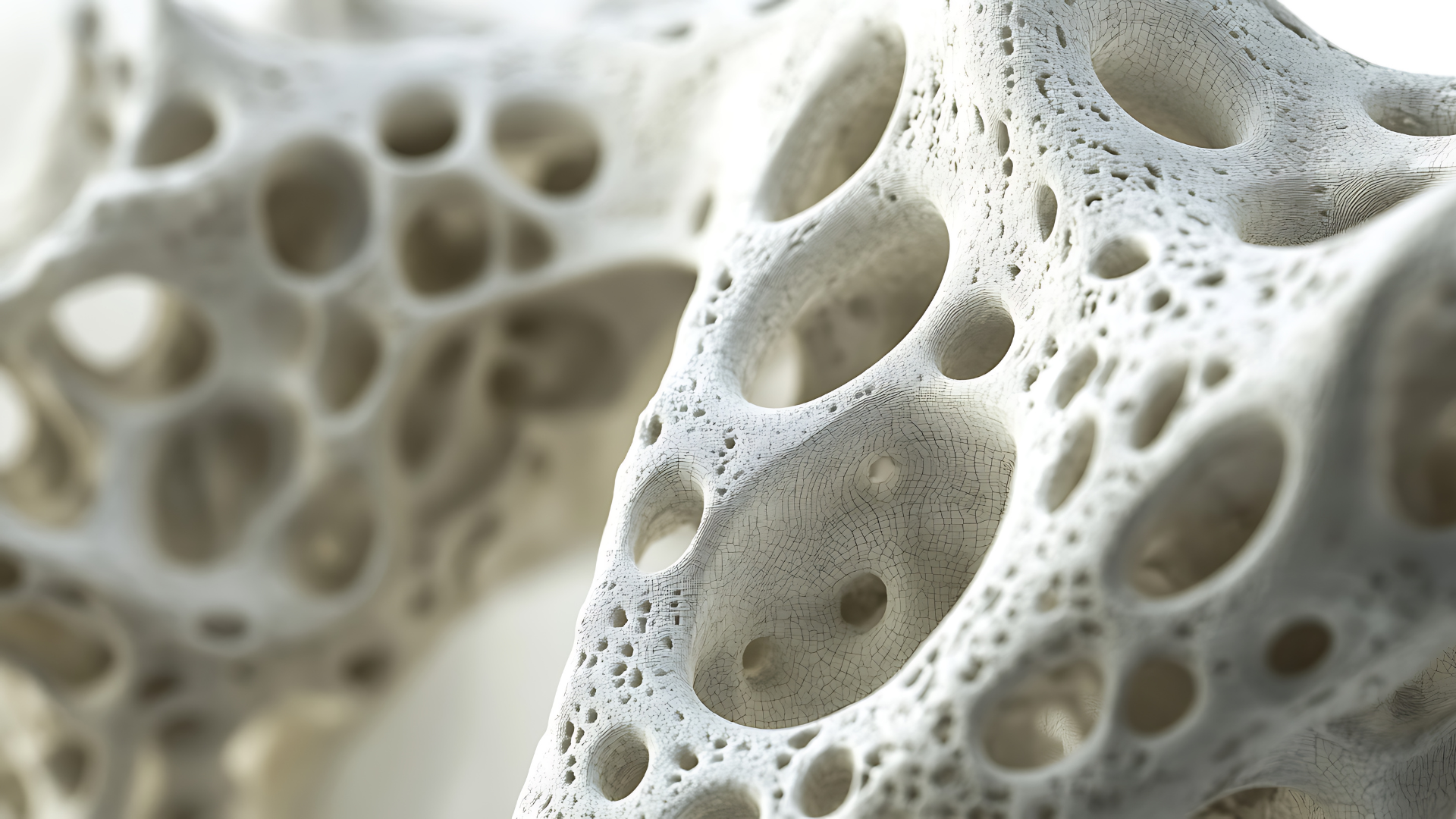
Close up of bone density.
Who is at risk?
Anyone can develop osteoporosis, but certain factors increase your risk:
Post-menopausal women
Advancing age
Family history
Small or underweight body type
Diet low in calcium and vitamin D
Smoking or high alcohol intake
Sedentary lifestyle
Eating disorders
Medical conditions such as hyperthyroidism, rheumatoid arthritis, diabetes, or kidney and liver disease
Digestive conditions such as coeliac disease or inflammatory bowel disease
How is osteoporosis diagnosed?

Medical professional with scrubs and gloves on reviewing a report.
A DEXA scan (Dual-energy X-ray absorptiometry) is used to measure bone mineral density in the spine, hip and sometimes the wrist. Results are reported as T-scores:
Normal: +1 to -1
Osteopenia: -1 to -2.5
Osteoporosis: -2.5 or lower
Does a low T-score mean I’ll fracture?
Not necessarily. Bone density is only one part of the equation. Many fractures occur because of falls, not because bones simply ‘break on their own.’ This is why strength, balance, coordination and reaction time are so important. Improving these reduces your likelihood of falling and therefore reduces fracture risk.
Can osteoporosis be reversed?
This is a question many clients ask. Conventionally, people are told that osteoporosis cannot be reversed, even if their T-score improves. This view is based on the idea that medications can improve the scan number but may not change the underlying reason bone was lost in the first place.
However, experts such as Dr Doug Lucas, an osteoporosis specialist and researcher, highlight the importance of addressing the root causes of bone loss: nutrition, strength training, hormonal changes, inflammation, metabolic health, sleep and stress.
When these drivers are supported, bone physiology can change in meaningful ways.
The most important message is this:
Bone is living tissue. When you change the inputs, you can change the outcomes.
What you can do to reduce your fracture risk.
Woman dead lifting weights.
There is a lot within your control, and the evidence is strong.
You can:
Build bone density through targeted strength and impact training
Improve muscle mass to support and stabilise joints
Enhance balance, coordination and agility to prevent falls
Support your overall health through nutrition, sleep and stress management
Use medication when clinically appropriate and in collaboration with your healthcare team
What exercise works best?
Not all exercise influences bone the same way. Walking, swimming or cycling are excellent for cardiovascular health, but they don’t provide the mechanical force bones need to grow stronger.
Bones respond to heavy, targeted loading. Research including the LIFTMOR trial has shown that high-intensity resistance training and impact exercise performed twice weekly can significantly improve:
Bone density
Balance
Functional strength
Posture
Confidence in movement
These outcomes occur safely when the exercises are supervised and structured well.
The ONERO® program at 3D Physiotherapy
At 3D Physiotherapy, we deliver the ONERO® program, an evidence-based strength and impact training approach developed directly from the LIFTMOR research. Designed for people with at risk of low bone density, osteopenia and osteoporosis,
ONERO® helps to:
Increase bone strength
Reduce fracture risk
Improve balance and muscle mass
Enhance mobility and posture
Build confidence in everyday movement
We focus on empowering you to understand your body, move safely and feel in control of your long-term health.
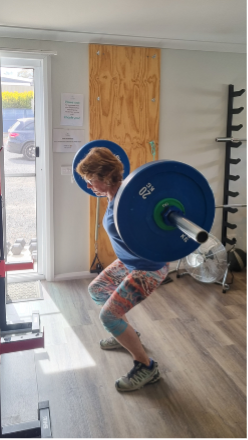
Woman back squatting weights
Taking the first step
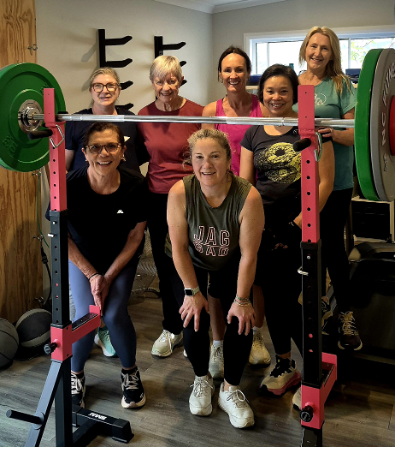
A group of ladies in exercise clothes who have just finished an ONERO® class.
If you have low bone density or osteoporosis, you are not powerless. You can take meaningful, evidence-based steps to strengthen your bones and protect your future mobility.
These lifestyle changes will help:
Stay active
Get strong
Improve your balance
Learn how to move with confidence
Join our Onero classes for expert support and a clear, structured plan
Our team brings genuine care, passion and expertise to every session. We work with you as a partner in your health, supporting you to build resilience, prevent injury and create long-term wellbeing.
If you’re ready to understand your body, protect your bones and live life on your terms, we’re here to help you get started.